

December 3, 2025
•
5 minute read
Mechanic of the Month: The Devils Bykes Team
Meet the team behind Devils Bykes in Brighton as they all answer the Mechanic of the Month interview!

Ryan Elson
Founder & CMO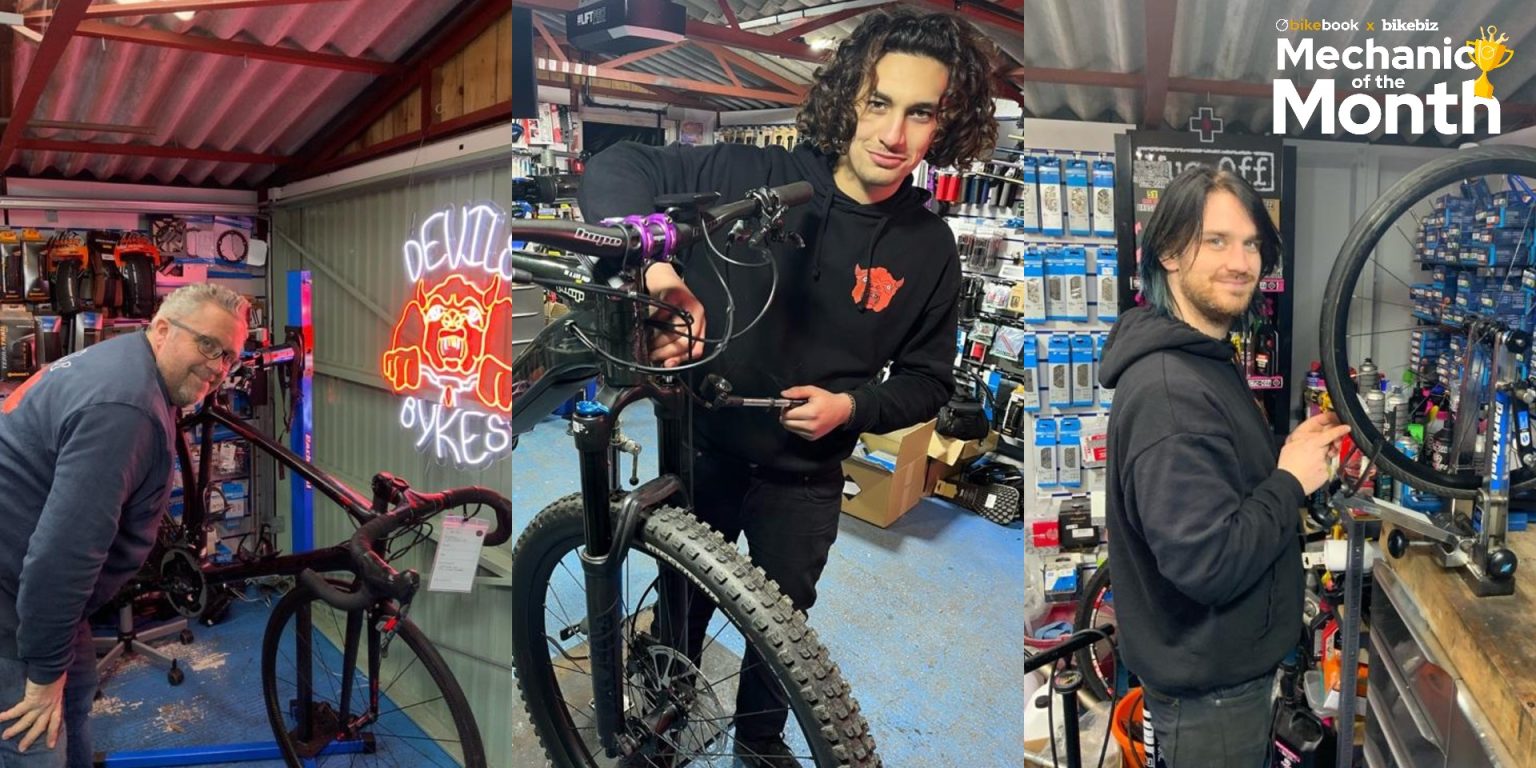
Earlier in the year, we launched our ‘Mechanic of the Month’ in partnership with bikebiz to champion bicycle mechanics around the UK.
We now have additional support from Topeak, who agreed to support the initiative by offering Topeak tools and best trade pricing across the Topeak Tools/Workshop range (via Extra UK) for 12 months.
Nominations are open to the public via bikebook, allowing anyone to nominate their favourite mechanic.
This month, we have something slightly different: a team! As the shop was nominated, it was only fair that the team got the recognition. Meet the team behind Devils Bykes in Brighton as they all answer the Mechanic of the Month interview!
Here, owner Matt Bentham answers with mechanics Arun and Dan:
Walk us through your journey into the world of bicycle mechanics? What initially sparked your interest in the job, and how did you get started?
“As long as I can remember, I have been involved in the world of cycle racing. As a family, we had many bikes, so I had to learn something about how they work and how to fix them. I joined the team at Devils Bykes (as an apprentice) a little over a year ago and discovered that there was far more to learn,” – Arun
Tell us about your current role and where you work?
“I’m a full-time bike mechanic at Devils Bykes in Brighton. I’m one of three full-time mechanics, and our days tend to be quite full with a variety of bikes and tasks spread between us, ” – Dan.
What does a typical day look like for you in terms of the bikes and jobs you most often encounter in your workshop?
“As a city bike repair shop, we get a healthy mix of all kinds of bikes through our door, from trusty commuters to aero TT bikes. I’d say we do get a high proportion of fancy road bikes that require TLC, so annual/seasonal services are pretty frequent,” – Matt
In your opinion, what is the most important, or perhaps misunderstood, aspect of a bicycle mechanic’s role?
“The cycle industry has developed quickly over the last ten years, with many new technologies and a lack of standards, which means the bike mechanic needs to understand the principles and how to apply them. People are often quick to assume bikes are simple, which is a common misunderstanding,” – Arun.
Do you feel mechanics receive adequate recognition for their expertise and the value they add?
“As Arun says, bikes are not as simple as people assume. Customers are sometimes a little embarrassed that they don’t know how to fix it themselves, and this sometimes comes across as a lack of recognition of our skills and experience,” – Matt

Do you have a favourite tool you can’t live without, or a particular type of job or repair that you find most satisfying or challenging?
“In today’s world of road disc brakes, our ParkTools disc brake facing tool is one of our most invaluable tools. Facing frames and forks allows us to ensure that our customers’ brakes are working as well as possible at all times. It’s also very satisfying going from fitting a poorly faced calliper, which can be very frustrating, to quickly getting callipers fitted and set up,” – Dan
Are you using Bikebook? If yes, what’s your experience been like?
“Yes, we do. It’s a great tool to help us manage jobs, record details of the work we do and communicate with customers. We thought we’d try it for a couple of weeks and have just not looked back,” – Matt
Beyond the practical skills, what do you believe are the most important qualities that make someone a great bicycle mechanic?
“Problem-solving is an especially important skill in the workshop. Being able to think on our feet allows us to consistently complete even the most complex tasks,” – Dan
How important have formal qualifications or continuous learning been in your development, and what are your thoughts on their value in the industry?
“I came to the industry relatively late in life. To get started, I invested in training and found it invaluable as I rapidly took on foundational skills. I am Cytech Level 3 qualified, and I got a great deal out of formal training….. You cannot underestimate the value of experience beyond, though. The most valuable training is attained in the workshop every day,” – Matt
“I don’t have any formal qualifications. I learned most of my skills in the workshop from other talented mechanics. I found that hands-on learning style really suited me,” – Dan
What changes in trends, bike technology, or rider culture have you seen during your time as a mechanic? How have these shifts impacted your work and the skills required?
“I think the arrival of electronics (shifting, e-bikes & dropper posts) has been the trend that has changed the job of a bike mechanic, requiring us to stay current and in touch with developments,” – Matt
What advice would you offer to someone who is just starting out or considering a career as a bicycle mechanic? What have you learned that you wish you’d known when you first began?
“To get into bike mechanics, I found it helpful to have a good understanding of how my own bike works. I started by doing little jobs such as changing brake pads and tuning gears. It also helped to have my family let me try and fix their bikes, which led to some frustrating arguments and a few trips to my local shop. Through my connections, I introduced myself to Matt at Devils Bykes, and we immediately got on which led to a part-time position shortly after,” – Arun
Follow the team at Devils Bykes to keep up to date with their work.


'%3e%3cg id='Final-Copy-2_2_' transform='translate(1275.000000, 200.000000)'%3e%3cpath class='st0' d='M7.4,12.8h6.8l3.1-11.6H7.4C4.2,1.2,1.6,3.8,1.6,7S4.2,12.8,7.4,12.8z'/%3e%3c/g%3e%3c/g%3e%3c/g%3e%3cg id='final---dec.11-2020'%3e%3cg id='_x30_208-our-toggle' transform='translate(-1275.000000, -200.000000)'%3e%3cg id='Final-Copy-2' transform='translate(1275.000000, 200.000000)'%3e%3cpath class='st1' d='M22.6,0H7.4c-3.9,0-7,3.1-7,7s3.1,7,7,7h15.2c3.9,0,7-3.1,7-7S26.4,0,22.6,0z M1.6,7c0-3.2,2.6-5.8,5.8-5.8 h9.9l-3.1,11.6H7.4C4.2,12.8,1.6,10.2,1.6,7z'/%3e%3cpath id='x' class='st2' d='M24.6,4c0.2,0.2,0.2,0.6,0,0.8l0,0L22.5,7l2.2,2.2c0.2,0.2,0.2,0.6,0,0.8c-0.2,0.2-0.6,0.2-0.8,0 l0,0l-2.2-2.2L19.5,10c-0.2,0.2-0.6,0.2-0.8,0c-0.2-0.2-0.2-0.6,0-0.8l0,0L20.8,7l-2.2-2.2c-0.2-0.2-0.2-0.6,0-0.8 c0.2-0.2,0.6-0.2,0.8,0l0,0l2.2,2.2L23.8,4C24,3.8,24.4,3.8,24.6,4z'/%3e%3cpath id='y' class='st3' d='M12.7,4.1c0.2,0.2,0.3,0.6,0.1,0.8l0,0L8.6,9.8C8.5,9.9,8.4,10,8.3,10c-0.2,0.1-0.5,0.1-0.7-0.1l0,0 L5.4,7.7c-0.2-0.2-0.2-0.6,0-0.8c0.2-0.2,0.6-0.2,0.8,0l0,0L8,8.6l3.8-4.5C12,3.9,12.4,3.9,12.7,4.1z'/%3e%3c/g%3e%3c/g%3e%3c/g%3e%3c/g%3e%3c/svg%3e) Your Privacy Choices
Your Privacy Choices